Scheduled for Oblivion: The Federal Disposal Authorities That Erase Evidence Before You Can Ask for It
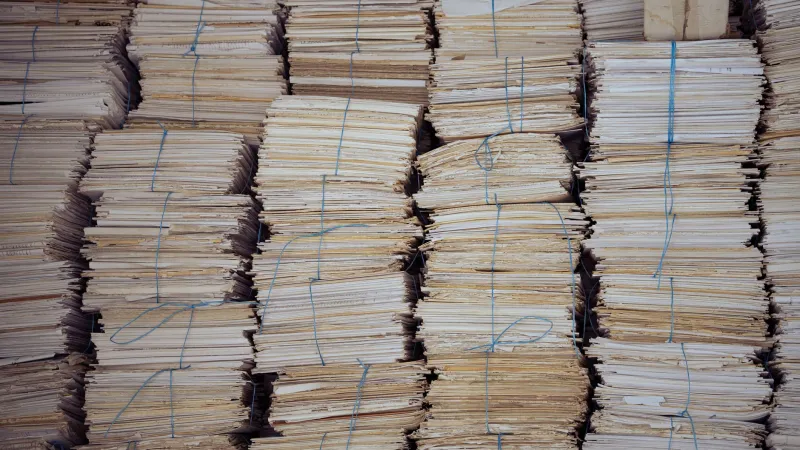
There is a version of document destruction that does not require shredders running at midnight or hard drives submerged in acid. It requires only a calendar, an approved form, and an agency willing to follow its own paperwork on schedule. This is the version that operates continuously across the federal government, largely unnoticed, and it is entirely legal.
The mechanism is called a records disposition authority—a formal schedule, approved by the National Archives and Records Administration (NARA), that dictates precisely how long a federal agency must retain a given category of document before it may be destroyed. These schedules govern everything from inter-office memoranda to environmental impact assessments to communications between agency officials and regulated industries. Once a record reaches the end of its scheduled retention period, the agency is not merely permitted to destroy it. In many cases, it is procedurally expected to do so.
The result is a system in which the federal government's most inconvenient documentation can vanish without legal consequence, without public notice, and often without any surviving record that the record ever existed.
How the Schedule Becomes a Shield
The Federal Records Act requires agencies to manage their records according to schedules submitted to and approved by NARA. On its face, this is sensible archival governance—not every agency email chain warrants permanent preservation. But the practical application of this framework has produced something considerably more troubling: a formalized window during which records can be eliminated before affected parties even know to ask for them.
Consider the timeline. A citizen or advocacy organization becomes aware of a potential regulatory failure. They begin gathering information, consulting attorneys, and preparing either a FOIA request or a legal complaint. This process routinely takes weeks or months. Meanwhile, the agency in question may be operating under a disposition schedule that authorizes destruction of precisely the relevant documents on a rolling basis—quarterly purges, annual clearances, or event-triggered disposals tied to the conclusion of a project or the closure of a program.
By the time the FOIA request arrives in the agency's inbox, the records it seeks may have already been lawfully destroyed. The agency responds that no responsive documents exist. That response is, technically, accurate.
This is not a hypothetical. Investigative journalists, public interest litigators, and congressional oversight staff have documented instances across multiple agencies—including the Environmental Protection Agency, the Department of Energy, and various components of the Department of Defense—in which records central to emerging controversies were destroyed on schedule in the period immediately preceding or concurrent with formal inquiry.
The NARA Approval Problem
The standard defense of this system is that NARA oversight provides a check against abuse. Agencies cannot simply invent destruction schedules; they must submit General Records Schedules or agency-specific schedules for review and approval. NARA evaluates these submissions for compliance with federal records law and historical preservation standards.
What NARA does not—and structurally cannot—evaluate is whether a given retention period is calibrated to minimize accountability exposure rather than reflect genuine administrative need. A schedule authorizing destruction of regulatory correspondence after two years may pass every archival review criterion while simultaneously ensuring that communications about a product approval, a contamination event, or an enforcement decision are eliminated before the pattern they document becomes publicly legible.
The agency drafting the schedule understands its own operational history in ways that NARA reviewers do not. It knows which categories of records have historically generated uncomfortable scrutiny. It knows how long investigations and litigation cycles typically run. A retention period set at eighteen months rather than thirty-six is not, on its face, suspicious. But it may be precisely calibrated to fall inside the window that matters.
Litigation Holds and Their Limits
Federal law does recognize one significant constraint on this system: the litigation hold. Once an agency has reason to anticipate litigation—a formal notice of intent to sue, a congressional subpoena, or in some interpretations even a pattern of FOIA requests suggesting adversarial intent—it is obligated to suspend applicable disposition schedules and preserve relevant records. Destruction of documents after a litigation hold is triggered can constitute spoliation, with serious legal consequences.
The problem is the phrase "reason to anticipate." Courts have interpreted this standard inconsistently, and agencies have exploited that inconsistency. Destruction that occurs before a formal legal trigger is established—even destruction that occurs the day before a lawsuit is filed—may fall entirely outside spoliation doctrine. The agency that moves quickly, that processes its scheduled disposals before the complaint arrives, may face no legal consequence whatsoever.
Public interest litigators report that this dynamic has produced a kind of records race: advocates attempting to file preservation demands as early as possible, agencies processing destruction authorities on accelerated timelines in response to public pressure. In several documented environmental and civil rights cases, critical agency communications were destroyed in the weeks immediately following news coverage of the underlying controversy but prior to any formal legal action—a sequence that is difficult to characterize as coincidental while remaining legally unprovable as intentional.
What Citizens and Advocates Can Actually Do
The architecture of this system is designed to be difficult to challenge, but it is not impenetrable. Several practical strategies have proven effective for citizens, journalists, and legal advocates attempting to preserve records before they disappear.
First, identify the applicable schedule. NARA maintains a publicly accessible database of approved records schedules. Individuals with a specific agency and subject matter in focus can research the retention periods governing relevant document categories before filing any formal request. This intelligence informs the urgency and timing of preservation demands.
Second, file preservation requests early and broadly. A formal written demand that an agency preserve all records related to a specified subject, sent before any FOIA request or legal filing, establishes an earlier baseline for litigation hold obligations. Some advocates send such demands as a matter of routine when monitoring agency activity in areas of public concern.
Third, engage congressional oversight. House and Senate committee staff have authority to issue document preservation directives that operate independently of FOIA and litigation frameworks. A congressional inquiry, even an informal one, can trigger preservation obligations that administrative procedures do not.
Fourth, challenge the schedules themselves. NARA accepts public comments on proposed records schedules during the approval process. Organizations with relevant expertise have successfully advocated for extended retention periods in categories with significant public interest implications. This is slow, procedural work—but it operates at the structural level where the problem originates.
The Accountability Gap Nobody Wants to Close
What makes this system particularly resistant to reform is that it implicates interests on multiple sides of the political spectrum. Agencies of every ideological orientation benefit from the latitude that approved destruction schedules provide. The same mechanism that eliminated inconvenient communications during one administration will serve the next. Reform requires institutional actors to voluntarily constrain a tool they may eventually need.
For the public, the consequence is a federal records environment in which the documentary evidence of government decision-making is subject to systematic, legal, and largely invisible attrition. The records that survive are not necessarily the most accurate or the most complete. They are the records that were not scheduled for disposal before anyone thought to ask.
Full disclosure, in this context, begins with understanding that the absence of records is not the same as the absence of events. Sometimes the most significant thing a document can tell you is that it used to exist.