Signals Without Owners: The Undocumented Transmission Infrastructure Blanketing American Airspace
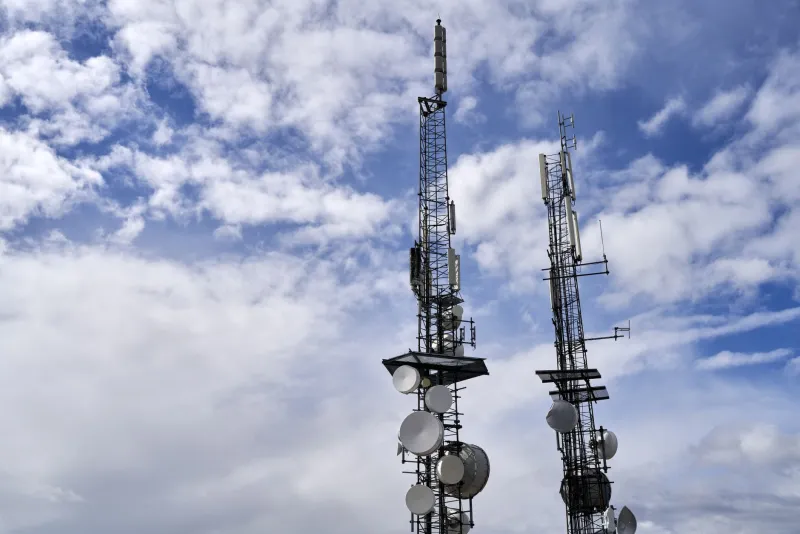
Something is transmitting. The signal is measurable, consistent, and in several documented cases, geographically persistent across months of independent observation. What it is not, according to every publicly accessible federal record, is licensed.
Across a growing number of spectrum analysis datasets — some compiled by independent researchers, others originating from sources inside the telecommunications industry who requested anonymity — a pattern has emerged that federal regulators have neither explained nor, in most cases, acknowledged. Cellular and radio frequency transmissions are being detected in American airspace that do not correspond to any entry in the Federal Communications Commission's licensing database, do not appear on any major carrier's publicly disclosed network infrastructure maps, and in several instances, cluster with unusual density in the immediate vicinity of military installations.
This is not a fringe observation. It is a measurable, documentable phenomenon. And the absence of any official accounting for it is itself a matter of public concern.
What the Spectrum Data Actually Shows
Spectrum monitoring — the practice of scanning radio frequency bands to identify active transmissions and compare them against known licensed sources — is neither exotic nor particularly expensive. Hobbyist-grade software-defined radio equipment can perform rudimentary versions of the task. More rigorous analysis requires calibrated instrumentation and methodological discipline, but the fundamental principle is straightforward: every authorized transmitter in the United States is supposed to be registered. The FCC maintains that registry. If a signal appears on a frequency band that no licensed entity is authorized to use in that geographic area, there is a discrepancy that demands an explanation.
The discrepancies being reported are not attributable to equipment error, atmospheric interference, or the well-understood phenomenon of signal propagation from distant licensed sources. In multiple independently reviewed cases, the anomalous transmissions exhibit characteristics consistent with deliberate, engineered cellular infrastructure: structured handshake protocols, frequency hopping behavior, and power output levels suggesting fixed, ground-based origin points rather than airborne or satellite sources.
One spectrum analysis dataset, reviewed by this publication and compiled over a fourteen-month observation period at sites in three states, identified recurring transmission signatures in LTE-adjacent frequency bands that matched no carrier allocation on file with the FCC for those geographic coordinates. The signals were not intermittent. They were present, measurable, and behaving like infrastructure.
The Regulatory Framework and Its Convenient Gaps
The FCC's licensing database is the foundational instrument of spectrum accountability in the United States. It is, in theory, the authoritative record of who is authorized to transmit what, where, and at what power level. In practice, the database contains categorical exemptions that functionally remove entire classes of transmitters from public visibility.
Federal government entities — including the Department of Defense, the National Security Agency, and a range of intelligence community affiliates — are not required to register transmitters through the standard FCC licensing process. A separate coordination mechanism, administered through the National Telecommunications and Information Administration, governs federal spectrum use. The NTIA's records are substantially less transparent than the FCC's, and significant portions of federal spectrum allocation data are withheld from public disclosure on national security grounds.
This creates a structural accountability gap. Transmissions originating from federal infrastructure may be entirely lawful under the existing regulatory framework while remaining completely invisible to any public verification mechanism. The practical consequence is that anomalous signals detected near military installations cannot be definitively attributed to federal sources — nor can they be definitively ruled out. The architecture of disclosure was designed, whether intentionally or not, to prevent the question from being answerable.
Geographic Patterns That Resist Coincidence
The clustering of anomalous transmission detections near military facilities is a detail that independent researchers have noted with increasing frequency. Installations in the American Southwest, the mid-Atlantic region, and along portions of the Pacific coast have appeared repeatedly in compiled datasets. The proximity is statistically notable, though causation cannot be established from signal detection alone.
What can be established is that the pattern warrants investigation by an entity with the legal authority and technical resources to conduct one — and that no such investigation has been publicly initiated. Requests submitted to the FCC under the Freedom of Information Act seeking records related to anomalous spectrum detections near federal facilities have, in documented cases, returned responses citing national security exemptions or asserting that no responsive records exist.
The assertion that no responsive records exist is itself informative. Either the FCC is not monitoring for the anomalies that independent researchers have documented, which would represent a significant regulatory failure, or it is monitoring for them and the resulting records are being withheld. Neither scenario is reassuring.
Industry Silence and the Limits of Carrier Accountability
Major US cellular carriers — AT&T, Verizon, T-Mobile, and their subsidiaries — maintain detailed internal records of their own infrastructure deployments. Tower locations, frequency allocations, and network coverage boundaries are tracked with considerable precision for operational reasons. Carriers have a financial and competitive incentive to know exactly what infrastructure exists within their licensed territories, because unauthorized transmitters operating on adjacent frequencies can degrade network performance.
Industry sources familiar with carrier interference monitoring have indicated, without attribution, that anomalous signal detections are not unknown within carrier technical operations. The standard response, according to these sources, is to document the interference, attempt to identify the source through conventional means, and — when the source cannot be identified and the interference does not rise to a threshold that triggers formal FCC complaint procedures — to treat the matter as unresolved and move on. There is no industry-wide mechanism for aggregating these unresolved cases or subjecting them to coordinated analysis.
The result is a fragmented record of anomalies that no single institution has both the incentive and the authority to synthesize into a coherent public accounting.
The Question That Remains Open
This investigation does not assert that the undocumented transmissions detected across American airspace represent any specific threat, serve any particular covert purpose, or originate from any identified entity. What the available evidence supports is a narrower but consequential conclusion: transmissions are occurring that the existing public accountability framework cannot explain, and the agencies responsible for spectrum oversight have not offered explanations.
The public has a legitimate interest in understanding what is transmitting in American airspace, who authorized it, and under what legal framework it operates. Spectrum is a public resource. Its use — by commercial, private, or governmental entities — is supposed to be subject to a system of disclosure and accountability that allows for independent verification.
When that system produces gaps large enough for persistent, structured transmission signatures to exist without any public record, the gap itself becomes the story. Full Disclosure Project will continue monitoring regulatory responses — and the absence of them — as this investigation develops.
Requests for comment submitted to the FCC's Office of Engineering and Technology and the NTIA's Office of Spectrum Management for this article did not receive responses prior to publication.