Invented and Erased: The Government's Secret Authority to Bury Your Patent Before Anyone Sees It
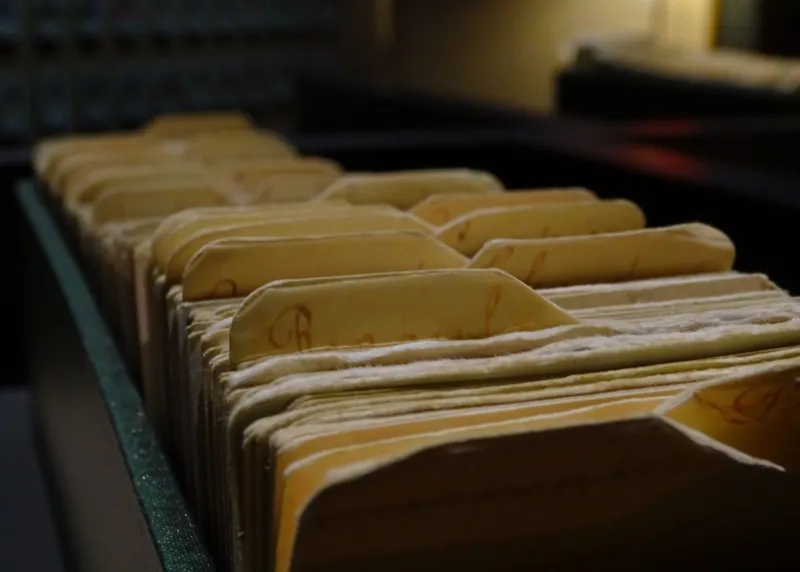
When an American inventor submits a patent application to the United States Patent and Trademark Office, the assumption is straightforward: the government will review the claim, grant or deny protection, and publish the result. The system is supposed to be transparent by design, a public ledger of innovation that rewards disclosure with legal protection. What most inventors do not know — and what the federal government has never made a priority to advertise — is that a parallel process exists, one that can intercept a patent application before it ever reaches the public record and seal it away, sometimes permanently, under the authority of a secrecy order.
This is not a hypothetical power. It is a functioning, routinely exercised mechanism embedded in federal law, and it has been used to suppress hundreds of inventions across decades of American technological development.
The Legal Foundation Nobody Talks About
The authority to classify patent applications derives from the Invention Secrecy Act of 1951, a Cold War-era statute that granted federal agencies the power to request that the USPTO withhold publication of any patent application deemed potentially harmful to national security. The law was designed for an era of nuclear anxiety, intended to prevent weapons-relevant discoveries from reaching adversarial states through the open patent system. Seventy years later, the statute remains in effect, largely unchanged, and its scope has expanded well beyond its original intent.
Under the current framework, any federal agency — not merely defense or intelligence bodies — can petition the USPTO's Licensing and Review office to impose a secrecy order on a pending application. The applicant receives a formal notice informing them that their invention has been classified. They are prohibited from discussing the technology with foreign nationals, from filing equivalent applications in other countries, and in many cases from commercializing the invention in any form. Violation of a secrecy order is a federal criminal offense.
The inventor is told very little else. The agency that requested the order is not required to identify itself. The specific national security rationale is not disclosed. There is no public docket, no announced review timeline, and no automatic sunset provision that guarantees eventual release.
The Numbers Behind the Silence
The USPTO publishes an annual report on secrecy order statistics, a document that receives almost no mainstream attention. As of recent reporting years, approximately 5,000 to 6,000 patents have been placed under secrecy orders at some point since the program's inception, with the active count at any given time hovering above 500. The Defense Department initiates the overwhelming majority of these requests, but the Department of Energy, the National Security Agency, and other agencies have also exercised the authority.
What those numbers cannot convey is the nature of the inventions themselves. Because the applications are sealed, independent researchers, journalists, and even members of Congress have no visibility into what categories of technology are being suppressed, whether the classifications remain proportionate to genuine security concerns, or whether the program has drifted toward protecting commercial or institutional interests rather than national ones.
Historical declassifications have offered occasional glimpses. Technologies related to cryptography, advanced propulsion, directed energy, and certain materials science applications have surfaced in declassified order releases over the years. Some inventors have reported that their suppressed work later appeared in government-developed systems, raising pointed questions about compensation and attribution that the current legal framework does not adequately resolve.
The Inventor's Dilemma
For the individual inventor, a secrecy order is a profound disruption. Unlike a patent denial, which at least allows the applicant to revise and resubmit, a secrecy order places the inventor in an indefinite legal limbo. They cannot pursue commercial development. They cannot seek foreign patent protection. They cannot publish academic papers describing the technology. They continue to bear the costs of maintaining the application while receiving no enforceable rights in return.
The law does provide for compensation in cases where the government subsequently uses a suppressed invention, but the mechanism for claiming that compensation is opaque, under-resourced, and rarely successful. Inventors who have pursued compensation claims describe a process that requires them to prove government use of their technology — a task made nearly impossible when the relevant programs are themselves classified.
Small inventors and independent researchers bear this burden disproportionately. Large defense contractors operating within the classification ecosystem often have legal infrastructure and agency relationships that allow them to navigate secrecy orders more effectively. A lone engineer who develops a novel energy storage system in a private laboratory has no equivalent support structure when the government decides their work is too sensitive for public disclosure.
Scope Creep and the Absence of Oversight
Critics of the program — a community that includes patent attorneys, civil liberties advocates, and a small number of legislators who have examined the issue — argue that the Invention Secrecy Act has never been subjected to the kind of rigorous oversight that its consequences warrant. There is no independent review board tasked with auditing active secrecy orders for continuing necessity. There is no mandatory declassification timeline analogous to the executive order provisions that govern classified national security documents more broadly.
The USPTO's internal review process allows agencies to renew secrecy orders annually, and renewals are rarely contested. An invention classified in the 1970s could theoretically remain under a secrecy order today, long after any plausible security rationale has expired, simply because no institutional actor has prioritized reviewing it.
This structural inertia has real consequences for the broader innovation ecosystem. If a suppressed technology represents a genuine advance — in energy efficiency, materials science, medical devices, or any other domain — its removal from public circulation means that independent researchers cannot build upon it, that competing approaches may be pursued wastefully, and that the public benefit the patent system is designed to generate never materializes.
What Disclosure Would Actually Require
Advocates for reform have proposed several mechanisms that would introduce accountability without compromising legitimate security interests. These include mandatory periodic review of all active secrecy orders by an independent panel with appropriate clearances, the establishment of a classified but congressionally accessible registry of suppressed applications, enhanced compensation procedures for inventors whose work is used by federal agencies, and a defined maximum duration for secrecy orders absent affirmative renewal justification.
None of these proposals has advanced through the legislative process. The Invention Secrecy Act remains as it was written during the early Cold War, a blunt instrument applied in a world its authors could not have anticipated.
The question this publication returns to, as it does across every domain where government authority intersects with public knowledge, is a simple one: who benefits from the current arrangement? When secrecy is self-renewing, when oversight is absent, and when the individuals most directly affected lack the resources to challenge the system, the answer is rarely the public.
More than 500 inventions are sealed at this moment. The American inventors behind them know. The agencies that classified them know. Everyone else is left to assume the system is working as intended.