Erased from the Record: When Research Facilities Close and Their Science Vanishes With Them
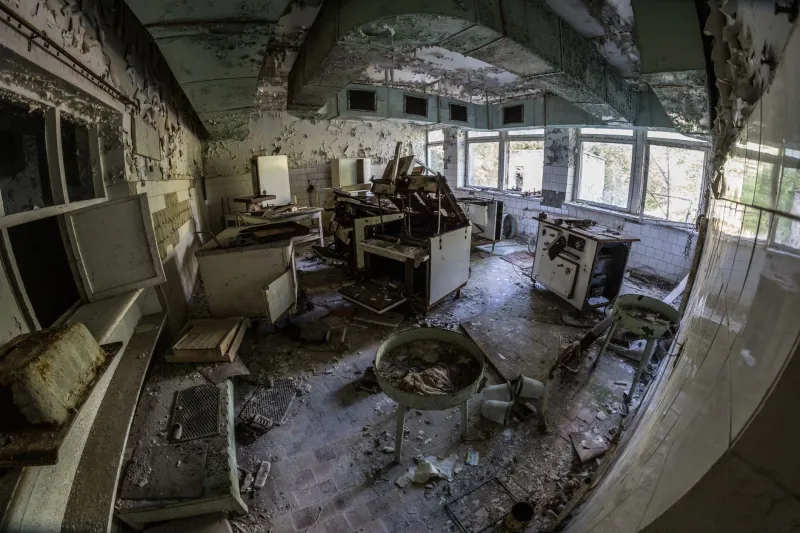
Somewhere in a federal warehouse, or perhaps in no warehouse at all, there may exist the remnants of a research program that once consumed millions of taxpayer dollars and the professional lives of dozens of scientists. Whether those remnants are intact, fragmented, or simply gone is, in many cases, impossible to determine. That uncertainty is not accidental.
The closure of a major biomedical research facility is rarely treated as a public event. There are no press conferences, no congressional hearings, no formal announcements directed at the scientific community or the general public. Institutions wind down. Contracts expire. Staff are reassigned or let go. And the accumulated knowledge of years — sometimes decades — of ongoing experimentation enters a bureaucratic gray zone from which it may never emerge.
The Architecture of Institutional Forgetting
Federal regulations governing the retention of research records are, on paper, reasonably comprehensive. The National Institutes of Health requires grantees to retain financial and administrative records for a minimum of three years following the close of a grant period. The Food and Drug Administration imposes longer retention windows for data tied to regulated products. But these frameworks share a critical structural weakness: they are designed around the administrative lifecycle of a grant or contract, not around the scientific value of the underlying data.
When a facility closes mid-study — or when its institutional sponsor undergoes reorganization, privatization, or federal defunding — the chain of custodial responsibility for experimental records can fracture entirely. Principal investigators disperse to other institutions. Department heads retire. Servers are decommissioned. Physical archives, if they exist at all, may be transferred to off-site storage facilities under the management of contractors who have no scientific stake in their preservation.
The result, as multiple former federal researchers have described to this publication, is a form of structured disappearance. The records do not always vanish in a single dramatic event. They dissolve, piece by piece, through a series of administrative decisions that are individually defensible and collectively catastrophic.
What Former Researchers Describe
"You have to understand that no one person decides to lose the data," explained one former staff scientist who worked at a federally operated biomedical facility that was decommissioned in the early 2010s and who requested anonymity due to ongoing professional relationships with federal agencies. "It happens because everyone assumes someone else is handling it. The PI thinks the institution has it. The institution thinks the federal sponsor took custody. The federal sponsor points back to the institution. And by the time anyone asks the real question, half the physical samples are gone and the digital records are on a server that no longer exists."
This account is not isolated. A 2019 report issued by the Government Accountability Office examining data management practices across federally funded research programs found that a significant proportion of agencies lacked formal policies specifically addressing the transfer or preservation of research records when facilities are closed or restructured. The GAO identified the absence of standardized decommissioning protocols as a systemic vulnerability — one that creates conditions under which valuable scientific information can be lost without any single party bearing clear legal responsibility.
A separate investigation by the Office of Inspector General at the Department of Health and Human Services reached similar conclusions regarding a cluster of contracted research facilities whose agreements were terminated between 2008 and 2014. In several documented instances, the OIG found that raw experimental data — including longitudinal study records spanning multiple years — could not be located by any party to the original research agreement.
The Regulatory Gap Nobody Closes
What makes this pattern particularly resistant to reform is the jurisdictional complexity that governs federally sponsored biomedical research. A single study may involve a federal agency as funder, a university as primary grantee, a private contractor as facility operator, and a pharmaceutical company as a collaborating partner. Each of these entities operates under a different regulatory framework, answers to a different oversight body, and maintains records according to different internal standards.
When a facility closes, there is no single federal authority empowered to compel comprehensive archival transfer across all of these parties simultaneously. The NIH can enforce its own records retention requirements against its direct grantees. The FDA can pursue compliance actions related to regulated data. But neither agency — nor any other — possesses the broad statutory authority necessary to ensure that the totality of a research program's scientific record is preserved and made accessible when the institutional infrastructure that produced it ceases to exist.
Legislative proposals to address this gap have surfaced periodically in Congress, most recently in the form of amendments to the America COMPETES Act that would have established minimum federal standards for research data preservation during facility transitions. Those provisions did not survive the final legislative process.
What Disappears Is Not Just Data
The consequences of these archival failures extend well beyond the inconvenience of missing files. Longitudinal biomedical studies — those tracking biological outcomes across months or years — represent a category of scientific knowledge that cannot simply be reconstructed. The conditions that produced the original data, including the specific patient populations, environmental exposures, and experimental protocols, are embedded in a historical moment that cannot be replicated.
When those records disappear, the scientific community loses not only the findings themselves but also the evidentiary foundation necessary to evaluate, challenge, or build upon them. Researchers at other institutions may unknowingly repeat studies whose results already exist somewhere in an unindexed archive. Regulatory agencies may make decisions without access to data that would materially alter their analysis. And in cases where the research involved human subjects, the individuals who participated in those studies — who consented to the use of their biological information in the service of scientific advancement — may find that their contribution has been rendered permanently invisible.
"The participants trusted the system," said a bioethicist at a major research university who has studied the regulatory dimensions of facility closures. "When that data disappears, it's not just a records management failure. It's a breach of the implicit compact that makes human subjects research possible."
The Demand for a Transparent Standard
What the current regulatory environment lacks is not goodwill. Most institutions involved in biomedical research operate with genuine intentions toward responsible data stewardship. What is absent is a mandatory, enforceable, and publicly accountable framework for the specific scenario of facility closure — one that requires comprehensive inventorying of all research records, formal transfer of custodial responsibility to a designated federal repository, and public notification when ongoing studies are interrupted.
Such a framework would not be technically complicated to design. The scientific community has developed robust data archiving standards. Federal repositories capable of accepting and indexing large research datasets already exist. The obstacle is not capacity. It is the absence of political will to impose binding obligations on the institutional actors — federal agencies, private contractors, and academic partners alike — who currently benefit from the ambiguity that allows records to disappear without consequence.
Until that ambiguity is resolved by statute, the laboratory that closes quietly on a Friday afternoon will continue to take its science with it. And the public, which funded that science, will have no reliable mechanism to find out what was lost — or to demand that anyone be held accountable for losing it.