Dead Air and Strange Waves: The Unexplained Signal Phenomenon Regulators Refuse to Examine
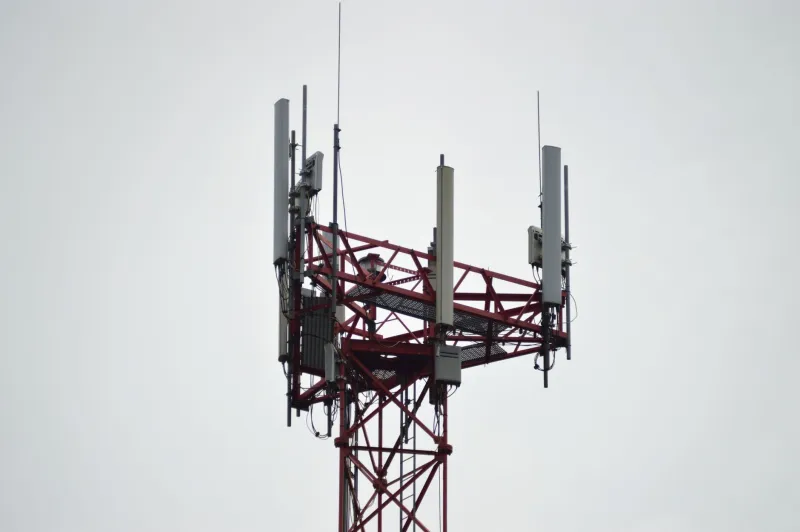
Sometime in the early hours of March 14, 2021, a licensed amateur radio operator in central Ohio picked up something unusual on the 40-meter band. The signal was not noise. It was not interference from a nearby transmitter. It was structured—repeating at irregular but discernible intervals, carrying what appeared to be encoded content across a frequency allocation where no licensed transmitter was operating. He logged it, recorded the audio, and filed a report with the Federal Communications Commission.
He received no response.
He is not alone. Across online forums, amateur radio networks, and independent monitoring communities, accounts like his accumulate with quiet persistence. Operators in rural Montana, suburban Georgia, coastal Maine, and the high desert of New Mexico have documented similar anomalies: signals that appear, repeat, and vanish without traceable origin; interference patterns that correspond to no licensed source; spectral signatures that experienced operators describe as unlike anything in standard propagation literature.
What unites these accounts is not their content—the signals vary considerably in character—but their institutional fate. They are reported, ignored, and filed away, if they are filed at all.
The Regulatory Gap
The Federal Communications Commission is the primary federal body charged with managing the electromagnetic spectrum in the United States. Its mandate covers licensing, interference resolution, and spectrum enforcement. What it does not include, in any formal or funded capacity, is the systematic investigation of anomalous signals that lack an obvious regulatory violation to prosecute.
This is not a trivial distinction. The FCC's enforcement apparatus is complaint-driven and violation-focused. An unlicensed transmitter operating in a protected band constitutes a violation; the agency has tools and authority to pursue it. A signal of unknown origin operating in a frequency range without an obvious victim—no licensed operator experiencing harmful interference, no clear jurisdictional hook—occupies a regulatory no-man's-land. There is no division within the FCC tasked with cataloging unexplained electromagnetic phenomena. There is no protocol for escalating anomalous reports to research institutions. There is, effectively, no mechanism for the concern to travel anywhere at all.
Former FCC engineer and spectrum policy consultant Dale Hatfield has written about this gap in the context of spectrum management more broadly. His analysis identifies a structural problem: the FCC's resources are calibrated for the regulatory workload of a communications economy, not for scientific investigation of electromagnetic anomalies. The agency lacks both the budget and the institutional culture to treat unexplained signals as anything other than enforcement problems awaiting a complainant.
What Amateur Researchers Have Actually Found
In the absence of institutional attention, independent researchers have constructed their own investigative infrastructure. The results are uneven but not trivial.
The Spectrum Monitor community, a loose network of software-defined radio enthusiasts and licensed amateur operators, has compiled multi-year datasets documenting recurrent signal anomalies across dozens of frequency ranges. Their methodology is imperfect—equipment varies, documentation standards are inconsistent, and the community lacks access to professional signal analysis tools—but the raw data is substantial. Certain anomalies appear in their logs with enough geographic and temporal consistency to rule out equipment artifacts or individual operator error.
Among the more frequently documented phenomena: narrowband transmissions appearing in internationally coordinated quiet zones, including frequencies designated for radio astronomy; structured pulsed emissions detected simultaneously by geographically separated operators in ways inconsistent with standard propagation; and low-frequency signals in the ELF and VLF ranges—frequencies used by military submarine communication systems—appearing at times and locations that monitoring volunteers cannot reconcile with known operational patterns.
None of these observations constitute proof of anything extraordinary. What they constitute is data—data that no federal agency is collecting, analyzing, or attempting to explain.
The Institutional Avoidance Pattern
Mainstream scientific institutions have been no more receptive than the FCC. University radio science departments, when approached by independent researchers seeking collaboration, have generally declined to engage with anomalous signal data. The reasons offered vary: insufficient methodological rigor, lack of peer-reviewed framing, liability concerns about associating institutional names with subject matter that carries stigma in certain scientific communities.
That stigma is itself worth examining. The history of electromagnetic research includes periods of serious institutional attention to anomalous propagation phenomena. The Stanford Research Institute conducted extensive ELF research through the 1970s and 1980s. NASA's radio science programs have investigated natural and artificial electromagnetic phenomena across a wide frequency range. The ionospheric research community has long acknowledged that the electromagnetic environment is more complex, and less fully understood, than popular accounts suggest.
What has changed is not the complexity of the electromagnetic environment but the institutional appetite for investigating its less explicable features. Researchers who have attempted to publish analyses of anomalous signal data describe a peer review environment that treats the subject matter itself as disqualifying, regardless of methodological quality. The result is a feedback loop: without published research, the topic lacks scientific legitimacy; without scientific legitimacy, research cannot be published.
Known Unknowns in the Spectrum
Some of what independent researchers document almost certainly has mundane explanations. Atmospheric ducting can carry signals thousands of miles beyond their intended range. Military and intelligence agencies operate on frequencies and in modes that are not publicly documented. Industrial equipment generates electromagnetic interference that can appear, to inexperienced operators, as structured transmissions. Misidentification is a genuine concern in any community of self-trained researchers.
But the mundane explanation cannot be confidently applied in the absence of investigation, and investigation is precisely what is not happening. The documented instances where experienced operators—engineers, military veterans with signals intelligence backgrounds, professional radio astronomers moonlighting as hobbyists—have flagged anomalies they cannot explain deserve more than administrative silence.
The electromagnetic spectrum is a public resource, allocated and managed on behalf of the American people by a federal agency operating under congressional mandate. When structured, repeating, unattributed signals appear within that public resource, the public has a legitimate interest in knowing what they are.
The Case for a Systematic Framework
Transparency advocates and spectrum researchers have proposed, in various forums, the outlines of what a serious investigative framework might look like. The essential elements are not complicated: a formal FCC intake process for anomalous signal reports; a data-sharing agreement with institutions equipped for signal analysis; minimum documentation standards that allow reports to be aggregated and compared; and a periodic public reporting requirement that would at least establish what is being observed, even where explanation remains elusive.
None of this has been implemented. None of it appears to be under active consideration.
In the meantime, the logs accumulate. The signals appear and disappear. The reports are filed and forgotten. And somewhere in central Ohio, a licensed amateur operator is still waiting for a response.